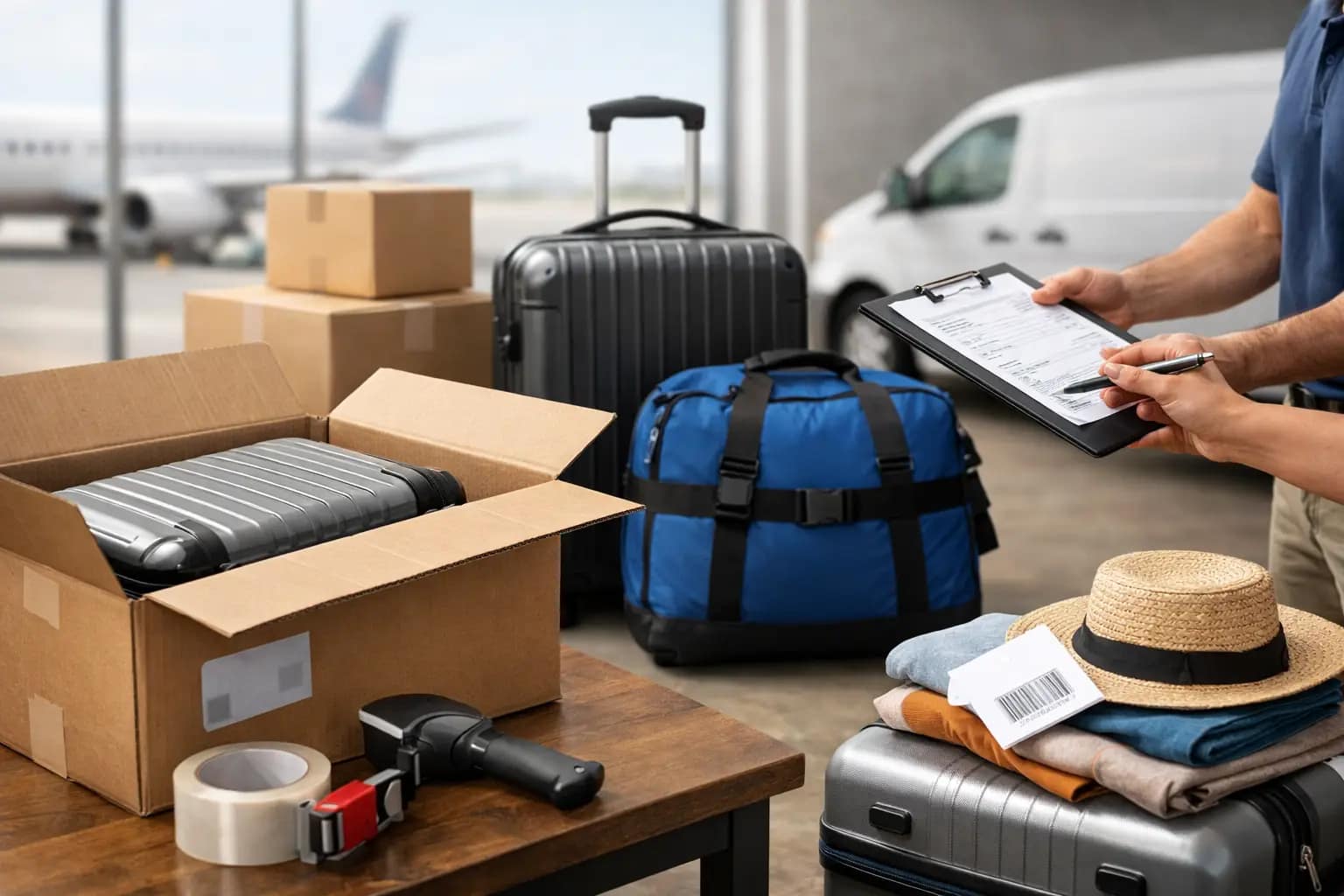
A missed connection is frustrating. Missing luggage at the same time can turn a simple trip into a full-day problem. That is why many travelers now look for the best ways to ship luggage before they leave home, especially when the trip includes airports, trains, hotels, or multiple stops.
Shipping luggage can be the right move, but not every option fits every trip. Cost, timing, baggage size, delivery address, and how much flexibility you need all matter. If you are traveling for business, arriving at a hotel, or trying to avoid hauling heavy bags through stations and terminals, the best choice is usually the one that reduces risk and keeps the schedule under control.
When shipping luggage makes the most sense
Shipping luggage is not only for long vacations. It is often the practical choice for travelers carrying skis, extra suitcases, work materials, or bags that are awkward to manage during transfers. Families with children also benefit because moving through airports or train stations gets easier when fewer items need to be carried by hand.
It also makes sense when baggage fees are high or when an airline has strict weight limits. In some cases, paying to ship one larger bag can be simpler than dealing with oversized luggage rules at check-in. The trade-off is timing. If you ship luggage separately, you usually need to prepare earlier and leave a margin for delivery.
Best ways to ship luggage for different travel needs
The best ways to ship luggage depend on where you are going and how precise the delivery needs to be. There is no single method that works for every traveler.
Standard courier shipping
A standard courier is often the first option people consider. It works well for planned trips when you know the delivery address in advance and have several days before departure. This method is usually suitable for medium and large suitcases, and pricing can be reasonable compared with last-minute airline baggage charges.
The advantage is straightforward scheduling and door-to-door handling. The downside is that standard service may not be ideal if your hotel check-in date could change or if you are moving between locations quickly. Delays are not common, but they are possible, and that matters more when the suitcase contains essential items.
Express shipping for tight schedules
If timing is the priority, express shipping gives more control. This option is useful for business travel, urgent deliveries, or trips where the luggage needs to arrive within a very specific window. Faster service usually includes better tracking and shorter transit times.
The trade-off is price. Express shipping costs more, and for heavy bags the difference can be significant. It is often worth it when the contents are time-sensitive, but less attractive for casual travel where waiting an extra day would not cause problems.
Hotel-to-hotel or hotel-bound luggage delivery
For travelers staying in hotels, sending luggage directly to the property can be one of the most practical solutions. It reduces strain during arrival and helps if you land early, plan to explore immediately, or do not want to wait at baggage claim.
This option works best when the hotel is ready to receive shipments and hold them securely. Before sending anything, confirm the name on the reservation, the delivery date, and whether the front desk accepts packages for arriving guests. A good shipment can become a problem very quickly if the labeling is incomplete.
Station and airport transfer with luggage handling
Sometimes the smartest solution is not traditional parcel shipping at all. If the goal is simply to move luggage safely between an airport, hotel, station, or private address, a dedicated transfer service with luggage handling can be the better fit.
This is especially useful when you want the bags and the traveler to stay on the same schedule. Unlike standard shipping, a direct transfer reduces handoffs and gives you a clearer point of contact. For guests arriving in South Tyrol, for example, a local operator such as Taxi Brixen Bressanone James can be a practical choice when timing, local knowledge, and direct delivery matter more than a generic courier chain.
Specialty shipping for oversized or fragile items
Not all luggage is standard luggage. Ski bags, golf clubs, instrument cases, and premium hard-shell suitcases may need extra protection or handling rules. In these situations, specialty shipping is often safer than checking the item with multiple carriers during a complex trip.
The key here is packaging. Even a sturdy suitcase may need outer wrapping, corner protection, or special labeling if it contains delicate gear. Specialty services usually cost more, but they can reduce the chance of damage when the item is difficult to replace or expensive to repair.
How to choose the right option
A good decision starts with three questions: when does the luggage need to arrive, where exactly should it be delivered, and how difficult would it be if it were delayed by a day? Those answers usually narrow the field quickly.
If the trip is fixed and the destination is stable, standard courier shipping is often enough. If your itinerary is tight, an express option or direct transfer is safer. If you are arriving at a hotel and want to travel light, hotel delivery can save time and effort. If the baggage is bulky or valuable, look for a service used to handling non-standard items.
Price matters, but it should be measured against the total travel burden. A cheaper option is not automatically better if it creates uncertainty, long waits, or extra local transport just to recover the bags.
Packing and labeling mistakes that cause delays
Most luggage shipping problems come from simple details, not dramatic failures. The first is poor labeling. Every bag should have a clear external label and an internal copy with the recipient name, phone number, destination address, and backup contact.
The second is weak packing. Zippers can shift during transport, handles can catch, and outer surfaces can get marked. Hard-shell suitcases hold shape better, while soft cases may need additional wrapping depending on the route and carrier.
The third is shipping too late. Travelers often count transit days but forget weekends, cut-off times, hotel receiving procedures, and possible delays from weather or peak travel periods. Giving yourself a buffer is not wasted time. It is what keeps a small delay from becoming a travel disruption.
What to avoid shipping in your luggage
Even when using one of the best ways to ship luggage, some items should stay with you. Passports, wallets, medications, laptops, jewelry, keys, and anything needed in the first 24 hours of the trip are better carried personally.
It is also wise to avoid packing irreplaceable documents or items with high sentimental value. If the bag is delayed, you want inconvenience, not a real loss. A shipped suitcase should contain things you need, but not the things you cannot function without.
Cost versus convenience
Many travelers compare luggage shipping only against airline baggage fees. That is too narrow. A better comparison includes taxi rides to and from terminals, waiting at baggage claim, the effort of carrying heavy bags through stations, and the risk of missing a connection because moving around took longer than expected.
For a direct trip with one suitcase, checking a bag may still be the easiest choice. For a multi-stop itinerary, a family trip, a hotel stay with early arrival, or a business schedule with little margin, shipping can deliver more value than the base price suggests.
A practical way to make the decision
If you are asking whether to ship your luggage, the real question is usually this: do you want the lowest upfront cost, or the lowest amount of travel friction? For some trips those two things overlap. For others, they do not.
The best plan is to match the method to the trip, not the other way around. Choose standard shipping when the schedule is relaxed, express service when timing is tight, hotel delivery when you want to arrive hands-free, and direct luggage transfer when coordination and reliability matter most. A well-handled bag should feel like one less thing to think about, which is exactly what good travel planning is supposed to do.

Pingback:Courier vs Luggage Transport: Which Is Better? - Taxi Brixen Bressanone James