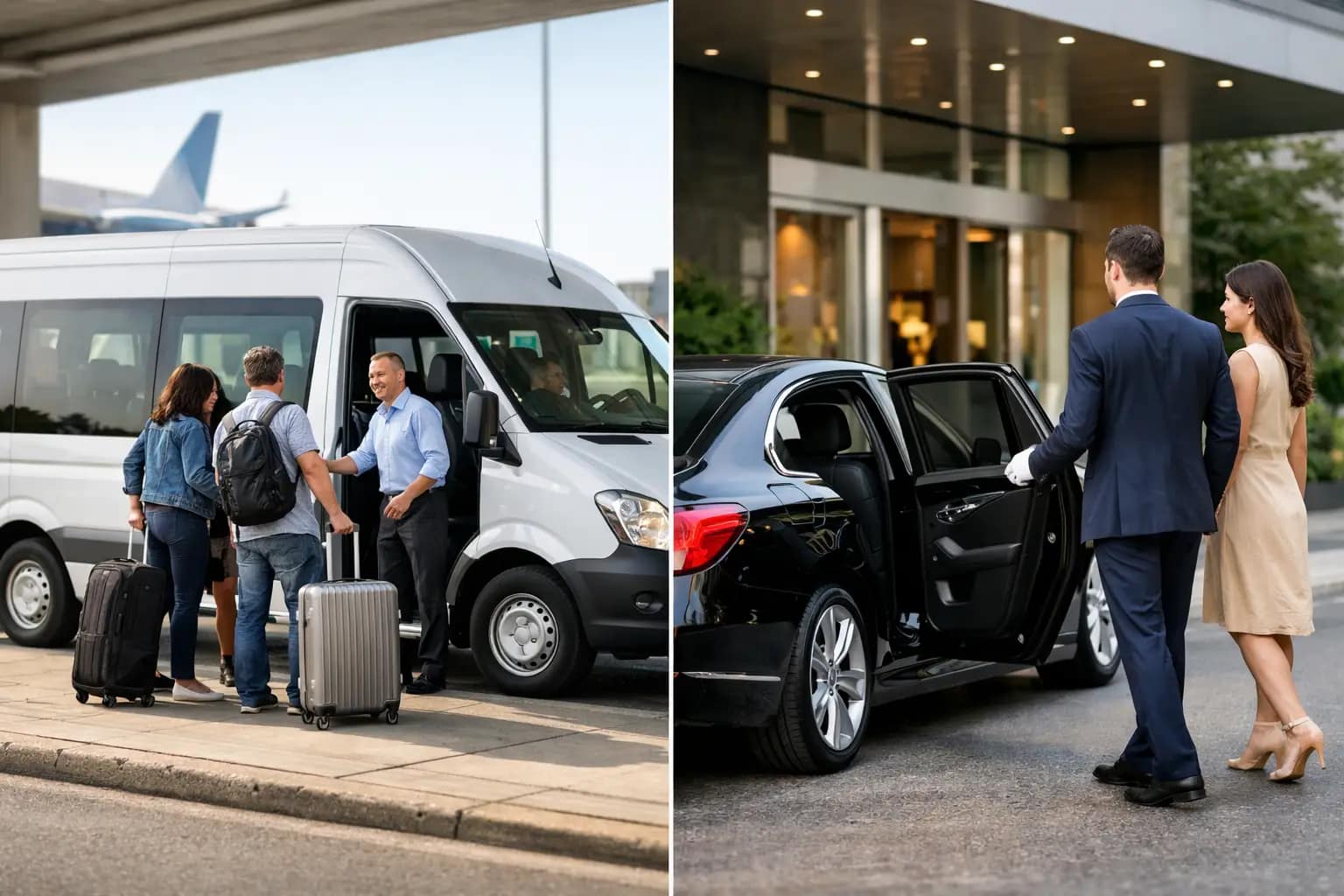
A flight that lands late in Innsbruck, a train connection at Bressanone station, or a hotel check-in with children and ski bags can make one question very practical: shared shuttle vs private car? Both options can get you from point A to point B, but they operate very differently. The better choice depends less on a general idea of price and more on your schedule, luggage, group, and need for flexibility.
For travelers in South Tyrol, transfer planning is often part of the trip itself. Mountain roads, seasonal traffic, early departures, and accommodations outside town centers can turn a simple ride into a time-sensitive arrangement. Knowing what each service includes helps avoid unnecessary waits and last-minute changes of plan.
Shared Shuttle vs Private Car: The Main Difference
A shared shuttle carries passengers who may be traveling to different hotels, stations, or airports along a similar route. It normally works on a fixed schedule or a pickup window. Since the vehicle serves more than one booking, the route can include additional stops and the departure time may be shaped by the needs of the group.
A private car is reserved for you, your travel companions, and your itinerary. The driver collects you at the agreed location and takes you directly to the requested destination. You are not waiting for other passengers, making unplanned stops, or adapting your travel time to another booking.
Neither solution is automatically right for every traveler. A shared shuttle can be sensible for a solo passenger with flexible timing. A private transfer is often the more practical option when every minute matters or when the journey involves luggage, children, business equipment, or a destination outside the usual shuttle route.
When a Shared Shuttle Makes Sense
Shared shuttles are designed around efficiency for multiple travelers. If your arrival and departure times match the available schedule, and you are comfortable sharing the vehicle, this can be a reasonable way to travel.
This option tends to work best for independent travelers with light luggage, no tight appointment, and a centrally located hotel. For example, a visitor arriving in daylight, staying near a main destination, and not needing to be somewhere at a precise time may find a shared ride perfectly adequate.
The trade-off is predictability. A shuttle may have a stated pickup time, but the actual trip duration can vary according to passenger pickups, drop-offs, traffic, and flight arrivals. If one traveler is delayed, the group may be affected. This is not necessarily a problem when you have time to spare. It can be frustrating when you have a dinner reservation, a train to catch, or a meeting scheduled shortly after arrival.
Shared transport also requires a degree of flexibility around space. Luggage capacity is shared among passengers. Large suitcases, strollers, sports gear, or several bags may need to be confirmed in advance, especially during ski season and busy holiday periods.
Why Many Travelers Choose a Private Car
A private car transfer is built around a specific booking rather than a shared route. You choose the pickup point, destination, and requested time. For airport transfers, that usually means the driver is scheduled around your flight details rather than a general shuttle timetable.
The most immediate benefit is direct travel. After landing or leaving the train, you can continue to your hotel, residence, office, or next destination without additional passenger stops. This is particularly useful for transfers between Bressanone, Bolzano, the Dolomites, airports, and accommodations in smaller villages.
Privacy is another consideration. A couple on holiday may want a quiet ride after a long journey. Families may need room to settle children and organize bags. Business travelers may need to make calls, review plans, or simply arrive composed and on time. In these situations, a private vehicle provides more control over the journey.
Flexibility matters just as much as comfort. Flight times change, rail services are delayed, and plans can shift on short notice. A professional private transfer provider can coordinate pickup details directly, clarify meeting arrangements, and respond to changes where possible. That direct communication reduces the uncertainty that often comes with travel logistics.
Price Is Not the Only Cost to Consider
At first glance, a shared shuttle often appears less expensive because the fare is divided among passengers. For one person traveling alone on a flexible schedule, that may indeed be the lowest-cost choice.
However, the comparison changes for two, three, or four travelers. A private car is priced for the vehicle and service, so the per-person cost can become more competitive as the group grows. It may also eliminate the need for separate local taxis when a shuttle stops at a central point rather than at your actual accommodation.
Time has value too. A route with multiple stops can add a significant amount of time after a long flight. Missing a train, arriving late for a meeting, or beginning a vacation with unnecessary stress can cost more than the difference between two transfer options. The best decision is usually based on the total experience, not only the initial fare.
Before booking, ask what is included. Confirm whether the service is door-to-door, whether luggage is included, how waiting time is handled, and what happens if your flight or train is delayed. Clear answers make it easier to compare services fairly.
Airport Transfers: Timing Changes Everything
Airport travel is where the difference between shared and private service is often most noticeable. Airport check-in times are fixed, while incoming flights can arrive early, late, or after a long wait for baggage. A shared shuttle may be suitable when its schedule aligns well with your flight. It is less ideal when you need a guaranteed departure from your hotel or have a short connection after landing.
A private airport transfer can be arranged for a specific departure time and pickup address. The driver can meet you according to the agreed instructions, assist with luggage, and take the most suitable route for the conditions. For early-morning flights, late-night arrivals, or destinations with limited public transportation, this level of planning can be especially reassuring.
The same applies to station transfers. Trains are convenient, but platforms, luggage, weather, and tight connections create pressure. Having a vehicle ready at the station means you do not need to search for transportation after arrival or calculate whether you can reach your hotel before reception closes.
Luggage, Families, and Special Travel Needs
Travel is rarely just about a seat in a vehicle. A family may have car seats, a stroller, and several suitcases. A skier may carry bulky equipment. A traveler on an extended stay may arrive with more bags than a standard shuttle can easily accommodate. Others may simply prefer assistance with loading luggage after a long trip.
Private car service allows these details to be discussed before departure. You can request the appropriate vehicle space and state the number of passengers and bags clearly. This is also helpful for travelers who need a calm, direct ride due to mobility concerns or who are visiting an unfamiliar area for the first time.
For business travel, reliable timing is usually the deciding factor. A direct pickup from a hotel, office, station, or airport gives professionals a clear plan for meetings and onward travel. It also provides a single point of contact if the schedule changes.
Choosing the Right Transfer for Your Trip
Choose a shared shuttle if you are traveling alone, your schedule is flexible, your luggage is limited, and a slightly longer route will not affect your plans. It can be a practical fit when convenience matters but timing is not critical.
Choose a private car if you want door-to-door service, have a fixed arrival or departure time, are traveling as a family or group, carry substantial luggage, or need to reach a hotel or destination outside the main route. It is also the stronger choice when you want direct communication and a transfer planned around your journey.
Taxi Brixen Bressanone James provides private transfers for airports, hotels, train stations, business trips, tours, and longer journeys in Italy and beyond. A clear request with your pickup location, destination, travel date, number of passengers, and luggage allows the service to provide an appropriate vehicle and prompt quote.
The easiest transfer is the one you do not have to worry about after booking. Match the service to the parts of your trip that cannot be delayed, and give yourself enough time to arrive relaxed, organized, and ready for what comes next.
