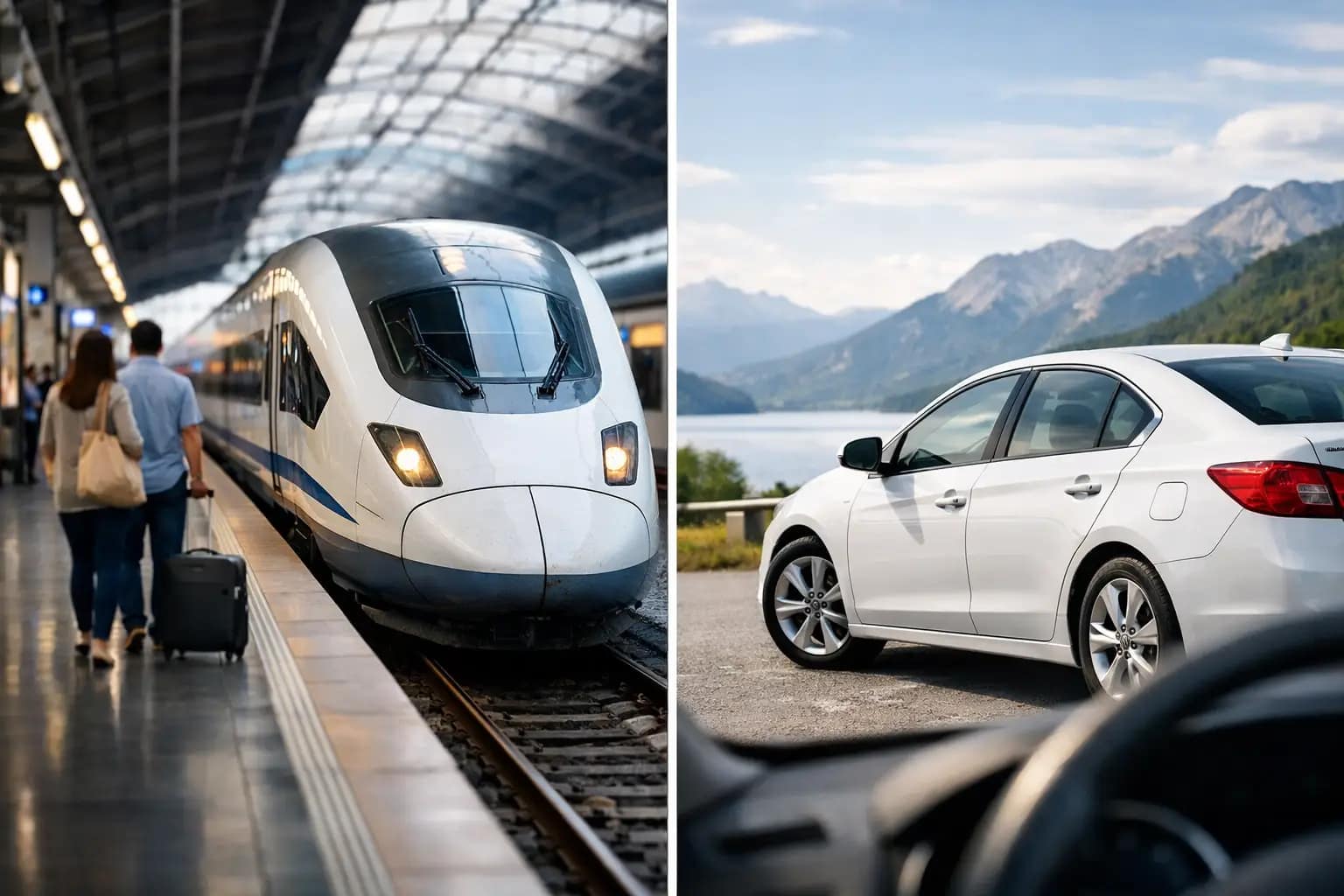
You arrive at Bressanone station with suitcases, a hotel check-in time, and perhaps children or ski equipment in tow. At that point, the question of a train transfer or rental car is no longer theoretical. It determines whether the first hour of your Alto Adige trip feels organized or unnecessarily complicated.
Both options can be right. A rental car gives you independence for a particular kind of itinerary. A private transfer gives you a direct, scheduled ride without driving, parking, or collecting a vehicle. The better choice depends on where you are staying, how often you plan to move around, the season, and how much time you want to spend managing transportation.
Train Transfer or Rental Car: The Main Difference
A train transfer is a pre-arranged ride from the station to your hotel, apartment, business meeting, airport, or another destination. Your driver meets you at an agreed time and takes care of the route and luggage. It is especially useful when the train is the main part of your journey and you only need local transportation at the beginning, end, or selected points of your stay.
A rental car is a vehicle you collect, drive yourself, refuel, park, and return. It can be practical for travelers who want to visit several remote locations on their own schedule. It also comes with responsibilities that are easy to underestimate when planning a vacation or a business trip from home.
The decision is not simply about price. It is about the value of your time, your comfort with mountain driving, the number of travelers, and the real amount of driving you expect to do.
When a Private Transfer Is the Better Choice
A transfer is often the most practical option when your destination is a hotel, wellness resort, ski area, town center, or business address. After a long train ride or flight, many travelers prefer not to locate a rental office, review vehicle paperwork, load bags into an unfamiliar car, and start driving in a new region.
This is particularly true for arrivals in the evening, early-morning departures, or connections with limited margin for delay. With a reserved transfer, the pickup time and destination are clear before you travel. If you have heavy luggage, a stroller, sports equipment, or several bags for a family, door-to-door service can make a meaningful difference.
For business travelers, the advantage is often reliability. A planned ride from Bressanone station to a meeting, hotel, or airport allows you to use travel time to prepare, make calls, or simply arrive rested. There is no need to search for parking near an unfamiliar address or allow extra time for vehicle return procedures.
A private transfer also works well when you intend to use trains, local buses, walking routes, or hotel shuttles for most of your stay. Renting a car for several days can become an unnecessary expense if it remains parked outside your accommodation.
Less Stress in Winter and Bad Weather
Alto Adige is beautiful in winter, but snow, ice, changing visibility, and mountain roads deserve respect. Visitors who rarely drive in these conditions may not feel comfortable handling a rental car, even when it is properly equipped.
A professional local driver knows the area, common routes, and seasonal road conditions. This can be reassuring when traveling to ski resorts, mountain hotels, or airports during the colder months. It also avoids the practical question of whether you are familiar with local winter equipment rules and driving requirements.
A Good Option for One-Way Journeys
A rental car is less convenient when your journey does not end where it begins. For example, you may arrive by train in Bressanone and fly home from Innsbruck, Verona, Munich, or another airport. You may also be continuing to a different city after a hotel stay or private tour.
One-way rentals can involve limited availability, extra charges, and a return location that does not fit your schedule. A private transfer is designed around the route you actually need, whether it is local, national, or international.
When a Rental Car Makes Sense
A rental car can be a sensible choice for travelers who want to explore widely and independently every day. If your plan includes small villages, trailheads, vineyards, scenic roads, and attractions far from public transportation, having your own vehicle may offer useful freedom.
It can also work well for a longer stay in a rural property where dining, shopping, and activities require frequent driving. In that case, calculate the full cost, not only the daily rental rate. Include insurance, fuel, parking, tolls, possible hotel garage fees, and the time required to collect and return the vehicle.
For a group traveling together, a rental car may look less expensive at first. That may be true if everyone has light luggage and the group will use the vehicle often. But a larger vehicle can cost more, may be harder to park in historic centers, and does not remove the need for one person to drive responsibly throughout the trip.
Flexibility Has a Practical Limit
The strongest argument for a rental car is flexibility. You can change direction, stop whenever you like, and leave at the time you choose. That freedom is valuable for travelers with a detailed self-drive itinerary.
Still, flexibility is only useful when driving is genuinely part of the plan. If you are spending most days in Bressanone, visiting nearby areas by train, or enjoying a hotel-based vacation, the car may create more tasks than benefits. Finding parking, monitoring restricted traffic zones, and returning the vehicle on time can take energy away from the trip itself.
Compare the Real Cost, Not Just the Quote
A transfer price is usually easy to understand because it relates to a specific route, time, and vehicle requirement. You know what transportation is arranged for that journey, and you do not need to estimate fuel use or parking costs afterward.
With a rental car, the advertised daily rate is only the starting point. Insurance coverage, deposits, fuel policies, additional drivers, child seats, tolls, and parking can change the final total. There can also be financial consequences from small damage, delayed return, or choosing the wrong fuel.
This does not mean a transfer is always cheaper or that a rental is always expensive. It depends on the itinerary. A direct station-to-hotel ride and a few planned excursions may favor a transfer. A week of daily travel to remote areas may favor a rental car. The useful question is: how many hours will the car actually be moving, and how many hours will it be parked?
Questions to Ask Before You Decide
Start with your arrival and departure points. If you are arriving by train and staying near Bressanone, a transfer may remove the most difficult part of the journey. If you are landing at an airport, consider whether you need a vehicle for the entire stay or only a comfortable ride to your accommodation.
Then consider your group. Families with young children, older travelers, guests with limited mobility, and people carrying substantial luggage often benefit from a vehicle arranged around their needs. A transfer can also be requested for a specific pickup time, including early departures and late arrivals.
Finally, be realistic about driving conditions and your schedule. If you have never driven mountain roads, are unfamiliar with winter conditions, or want to enjoy local wine with dinner without designating a driver, a private ride is usually the calmer option.
Make the Transfer Part of the Plan
Transportation should support your trip, not become its most demanding task. A private service such as Taxi James can arrange station transfers, airport rides, hotel transportation, business travel, private excursions, and longer routes based on your actual plans. Clear pickup details and a prompt quote help you decide before you arrive.
If a rental car will truly help you explore, choose it with confidence and plan for its full cost. If you only need to get from the station or airport to the right place at the right time, a reserved transfer lets the journey begin with less to manage and more time to enjoy where you are going.
